Technology
The Future of Medicine: Available Now
Neo7Bioscience specializes in the development of individualized peptide designs for patients with active diseases including cancer, autoimmune, neurodegenerative, viral and environmental as well as for patients seeking to prevent disease and enhance longevity.
Advancing Development Since 1998

- Isolated Autologous Conjugated Proteins
- Immune Clinical Study
- Column Filtration of Conjugated Proteins
- Purification with Peltier Capture for Administration
- Isolated Autologous Conjugated Proteins
- Immune Clinical Study
- Column Filtration of Conjugated Proteins
- Purification with Peltier Capture for Administration
- Direct Proteomics
- Urine
- HLA Phenotype
- Manual Sequence Dev
- EVTomics
- EV/ Direct Proteomics
- HLA Phenotype
- Auto Sequence Dev with no Checkpoint
- EVTomics
- EV/ Direct Proteomics
- HLA Phenotype
- Auto Sequence Dev
- Tri-Specific Checkpoint
- Longevity and Prevention Pipeline
- Cell and Tumor Peptide Scaffolding and Engineering
- LLM Integration
- Quantum Peptide Engineering
- Augmented Peptides
- aHI Precision Integration
- Spilex Genetic Safety Pipeline
- REVISS
A future where we do not wait for illness to take control.
We believe healthcare should do more than react to symptoms. By understanding each person’s biology, we can help find risks sooner, uncover problems that may have been missed, and guide care that is personal, proactive, and built to change as your body changes.
Advanced Multiomics Approach
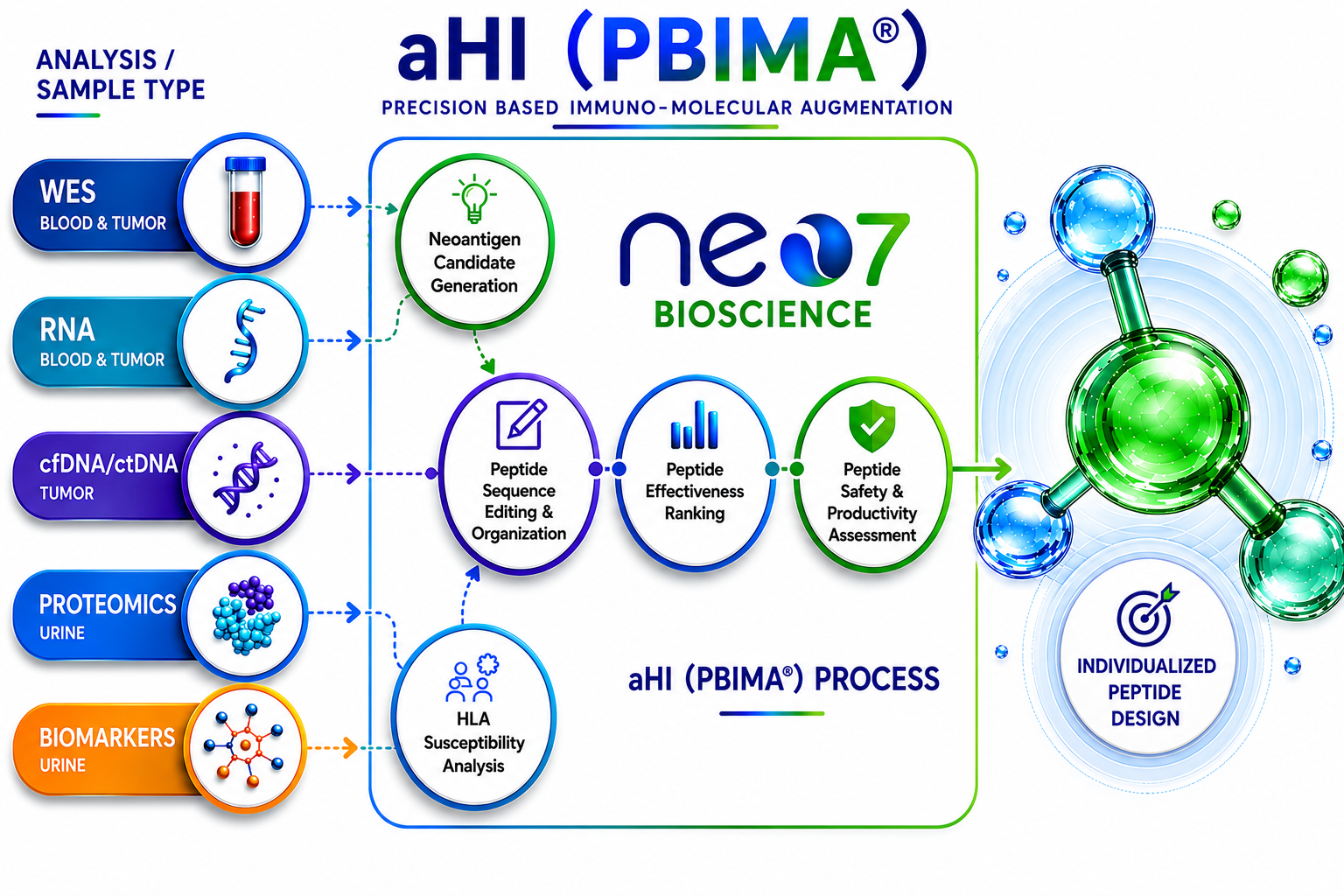
We are the first of its kind to combine WES (whole exome sequencing), RNA transcriptome, urinary exosomal proteomics, biomarkers, immune genetic mapping, and gene-drug interactions as a functional analysis.
This multi-faceted approach delivers a robust data set capable of uncovering potential and expressed risk unique to each patient and helps to advance the understanding of disease evolution and progression.
Functional Exome
*Looks at the working parts of your genes that provide instructions for making proteins. This helps identify gene changes and connected pathways that may affect how your body functions
RNA Transcriptome
*Shows which genes are active now and how strongly they are signaling. This helps reveal what your cells may be doing—not only what your DNA says is possible.
Tumor Exome
*Compares gene changes associated with the patient’s tumor to help identify mutations and potential cancer-related targets.
Individualized HLA Profile
Identifies your unique HLA type—part of how your immune system recognizes and responds to biological targets. This information helps guide target selection and peptide compatibility.
Why Is HLA Important?
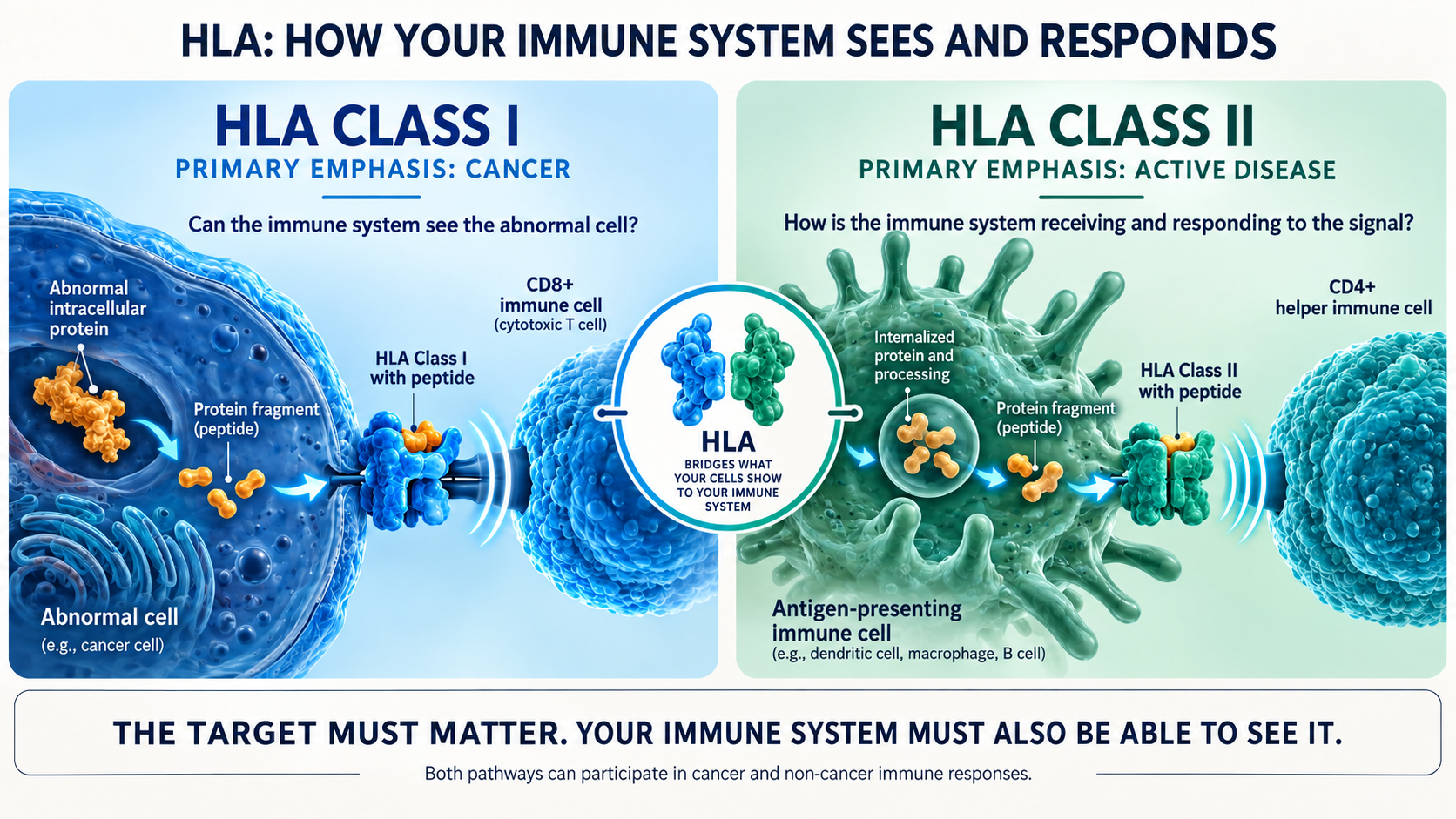
HLA is part of your immune system’s identification system. Think of it as a set of display windows on your cells. These windows show small pieces of proteins—called peptides—to your immune cells.
Because every person has a different HLA profile, the same peptide may be clearly presented in one patient but poorly presented in another. Neo7 uses HLA typing to help select targets designed around the way your immune system recognizes biological signals.
Primarily Used for Cancer
HLA Class I is found on nearly every nucleated cell in the body. It displays peptides made inside the cell to CD8+ cytotoxic T cells, which can recognize and destroy abnormal, infected, or transformed cells.
In cancer, cells may contain tumor mutations or produce abnormal proteins. Pieces of those proteins can be displayed through HLA Class I, acting like a molecular flag that tells the immune system:
Neo7 evaluates the patient’s tumor-related signals and HLA Class I profile to help identify peptides predicted to fit that patient’s immune-presentation system. This may help focus the personalized design on cancer-related targets the patient’s immune system is more likely to recognize.
Cancer can also reduce or alter antigen presentation as a way of avoiding immune detection. This is one reason it is not enough to identify a tumor mutation alone—the target must also be considered within the patient’s HLA profile and broader immune biology.
Cold Tumor Surveillance and Recognition
See The Signal-Design The Peptide-Restore Recognition
Precision Molecular Solutions · Individualized · HLA and Tumor Specific
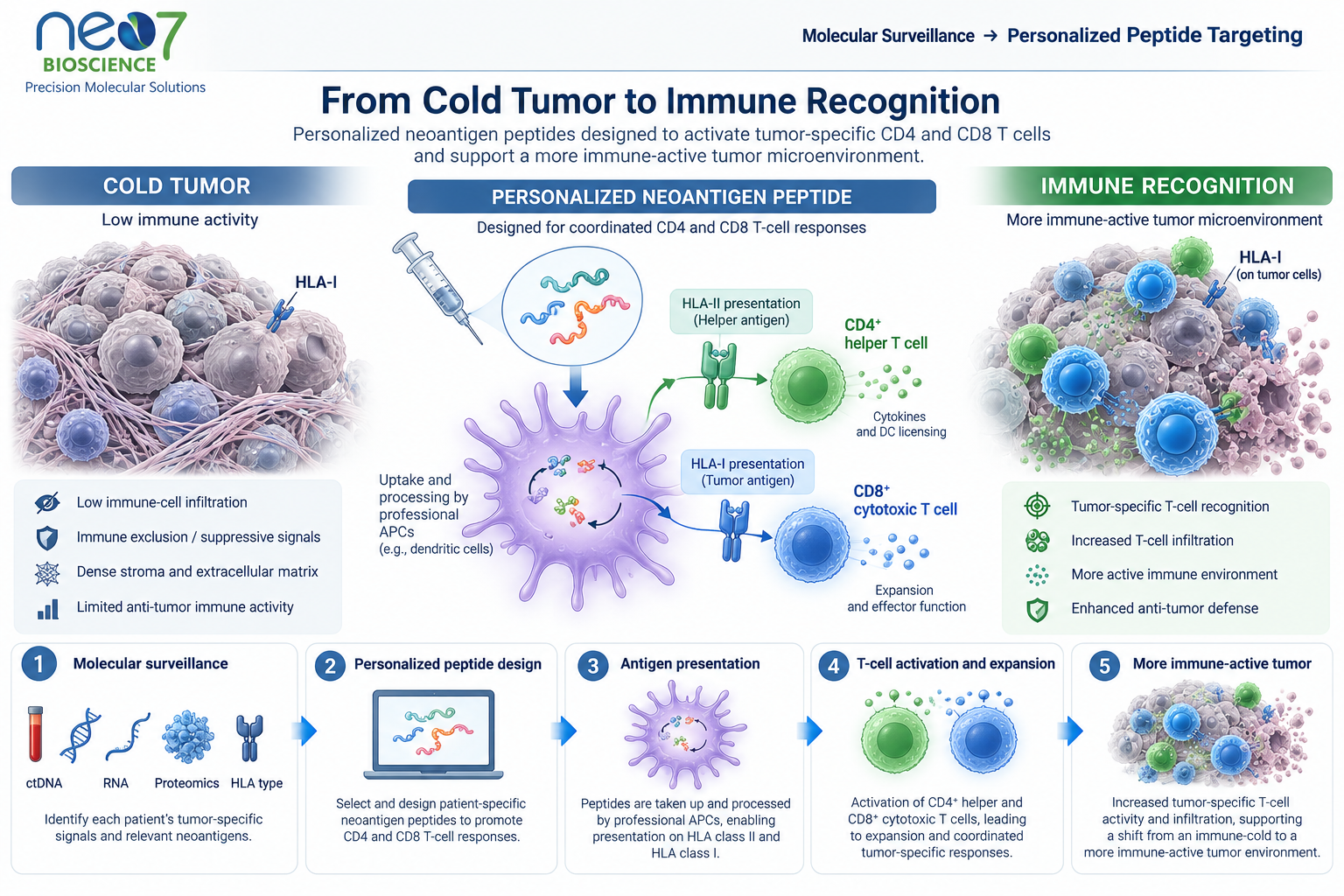
Neo7Bioscience uses molecular surveillance to read each patient’s tumor signals—including circulating tumor DNA, RNA, proteomics, and HLA type. These insights guide the design of personalized peptides intended to help the immune system recognize tumor-specific signals and build a targeted T-cell response.
When a tumor shows “cold” features, such as low immune-cell infiltration or limited immune activity, the goal is to support greater tumor-directed immune recognition and help shift the tumor environment toward a more immune-active state.
Our peptide design can combine an HLA class II helper antigen with an HLA class I tumor antigen within the same construct, supporting coordinated CD4⁺ helper and CD8⁺ cytotoxic T-cell responses. By engaging both helper and cytotoxic arms of the T-cell response, this approach is designed to strengthen tumor-specific immune recognition and help move an immune-cold tumor toward a more immune-active state.
How it works:
Primarily Used for Active Disease and Non-Cancer Conditions
HLA Class II is found mainly on specialized immune cells that collect information and coordinate immune responses. It presents peptides to CD4+ T cells, including regulatory T cells (Tregs), which contribute to the regulation of inflammation, immune tolerance and homeostasis, immune memory, and communication with other immune cells.
For autoimmune, inflammatory, neurological, congenital, infectious, metabolic, mitochondrial, and other complex conditions, Neo7 primarily uses the HLA Class II pathway to help understand how the immune system may be responding to relevant biological signals.
Think of HLA Class II as helping the immune system answer:
The goal is not simply to “boost” the immune system. An immune system can be overactive, underactive, confused, or poorly regulated. HLA-informed target selection is intended to support a more precise strategy for influencing dysregulated signaling and immune communication.
Why Does This Matter for Personalized Peptides?
Without HLA typing, a peptide may be selected because the target looks important—but that does not tell us how well it is predicted to fit the patient’s immune-presentation profile.
Neo7 uses HLA information to help:
- Match peptide candidates to the individual patient
- Prioritize targets predicted to be presented through that patient’s HLA molecules
- Distinguish cancer-focused Class I strategies from primarily Class II non-cancer strategies
- Reduce reliance on generic, off-the-shelf peptide selection
- Guide a more focused, patient-specific design
HLA matching does not guarantee immune recognition, treatment response, or a clinical outcome. It provides another important layer of personalization.
Cancer primarily asks: “Can the immune system see the abnormal cell?”
Active Disease primarily asks: “How is the immune system receiving and responding to the signal?”
Both HLA Class I and Class II can participate in cancer and non-cancer immune responses. The distinction above reflects the primary emphasis of each Neo7 pathway—not an absolute biological separation.
Direct Proteomics
Uses mass spectrometry to identify proteins that are present and active. Proteins provide important clues about what is actually happening within the body.
Cell-Free and Circulating Tumor DNA (cfDNA/ctDNA)
*Examines small pieces of DNA released into the bloodstream. In cancer, ctDNA can provide information about tumor-related mutations and molecular disease activity without relying only on a tissue biopsy.
Tumor RNA Transcriptome
Examines gene activity associated with tumor tissue. This helps show which cancer-related signals and pathways appear active—not simply which mutations are present.
Exosomal Proteomics
Studies proteins carried inside tiny particles that cells release to communicate with one another. This highly sensitive analysis may detect thousands of proteins and provide deeper insight into cellular activity, stress, and disease signaling.
Why Does Neo7 Evaluate the Urine Excretion Proteome?
Neo7 analyzes proteins and protein fragments found in urine to better understand what the body may be producing, processing, repairing, breaking down, and clearing.
DNA can show what is possible. RNA can show which biological messages are being sent. The urine excretion proteome provides another layer of evidence—showing proteins that may reflect what is happening downstream of those messages.
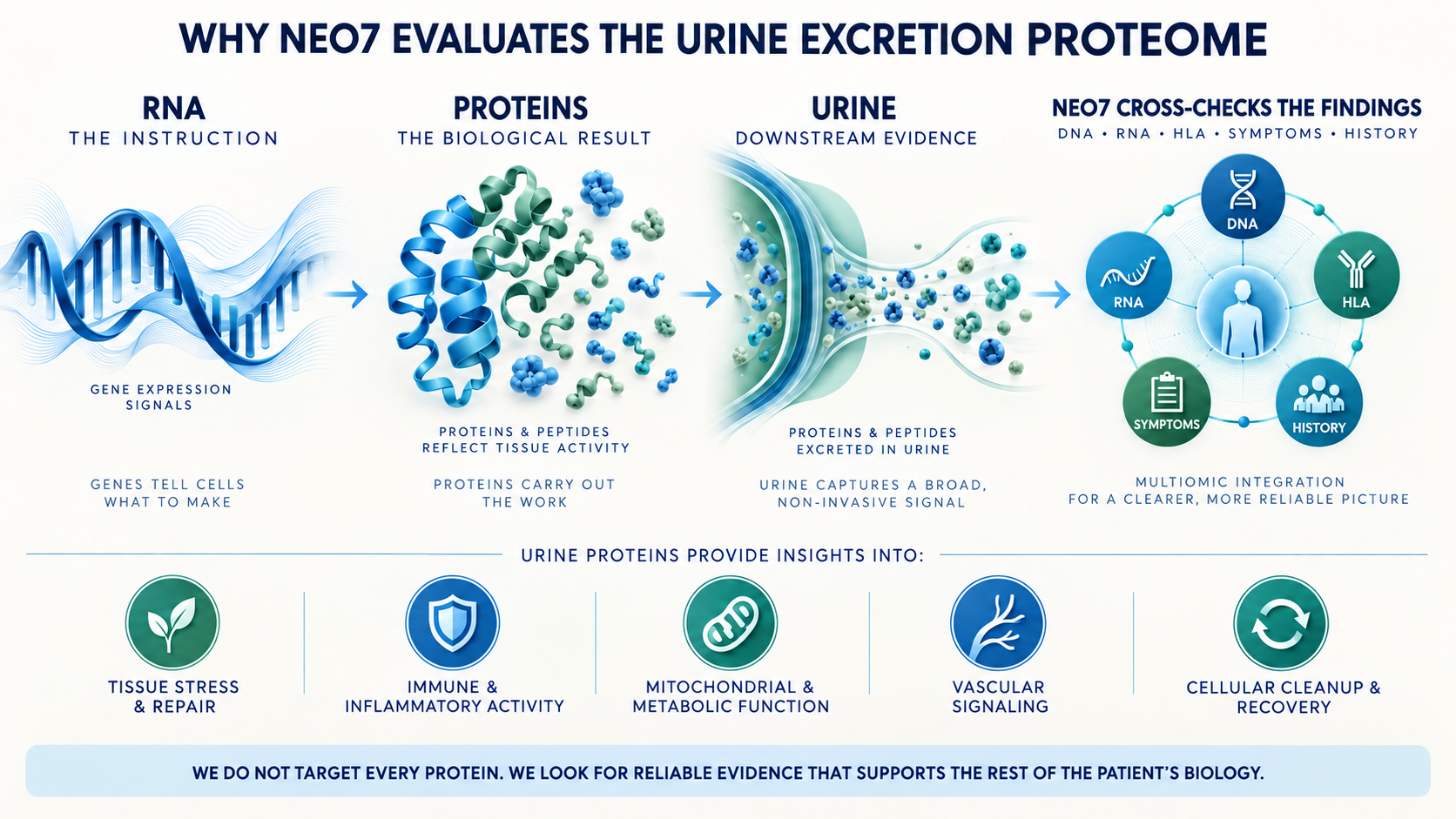
Neo7 evaluates the urine excretion proteome to look for credible patterns related to:
Urine contains filtered proteins from the blood, proteins released through the kidneys and urinary tract, protein fragments created during tissue remodeling, and proteins carried by extracellular vesicles. High-resolution mass spectrometry has identified thousands of proteins and peptides within the human urinary proteome. Scientific Reports
Neo7 does not treat every protein found in urine as a target. A urinary finding becomes more meaningful when it:
The excretion proteome is interpreted alongside the patient’s RNA transcriptome, functional genome, HLA profile, medical history, symptoms, and current treatments. This cross-checking helps the team distinguish a potentially meaningful biological pattern from an isolated finding.
Hydration, kidney function, medication use, infection, exercise, and sample quality can affect urinary proteins. For this reason, Neo7 never relies on urine alone to diagnose a condition or select a therapy.
By connecting gene activity with downstream protein evidence, Neo7 can develop a more informed, patient-specific target strategy—based on several layers of biology rather than a single laboratory result.
DNA shows what may be possible. RNA and proteins help show what may be happening now. Neo7 connects these layers to identify what matters most for the individual patient.
Precision Technology
Advanced technology. Human expertise. One patient.
Neo7 combines Augmented Human Intelligence (aHI) with PBIMA®—Precision-Based Immuno-Molecular Augmentation to turn complex patient data into a personalized therapeutic strategy.
Our platform brings together molecular findings, symptoms, medical history, known mutations, and current treatments to:
Advanced technology helps uncover patterns within thousands of biological relationships. A multidisciplinary team of molecular scientists, mathematicians, statisticians, geneticists, pharmacists, and medical providers then reviews the findings to determine what matters most.
PBIMA® does not simply identify genetic variants. It connects what a patient’s genes can do with what their RNA, proteins, immune system, symptoms, and clinical history suggest is happening now.
Those insights guide a peptide strategy designed to address faulty signaling, support immune balance, and improve biological function—based on the molecular needs of one patient.
Personalized Peptide Immunotherapy
Designed from your biology—not selected from a shelf.
Every Neo7 peptide design is created for one patient. Molecular findings are used to identify the abnormal signals and connected pathways that may be contributing to active disease, reduced function, or expressed biological risk.
The selected targets are combined into a personalized, multi-target peptide prescription designed to help influence and rebalance those signals.
A specialized delivery system helps protect the personalized peptides, support their stability, and improve how they are delivered within the body. This may allow for a more practical dosing schedule based on the patient’s prescription and treatment plan.
Each design also considers:
This personalized, HLA-informed approach is designed to provide greater target precision and reduce unnecessary immune activity compared with a generalized, one-size-fits-all strategy.
Individual responses and side effects can vary. Personalization cannot eliminate all risk, so treatment begins with a careful low-and-slow approach under licensed provider supervision.
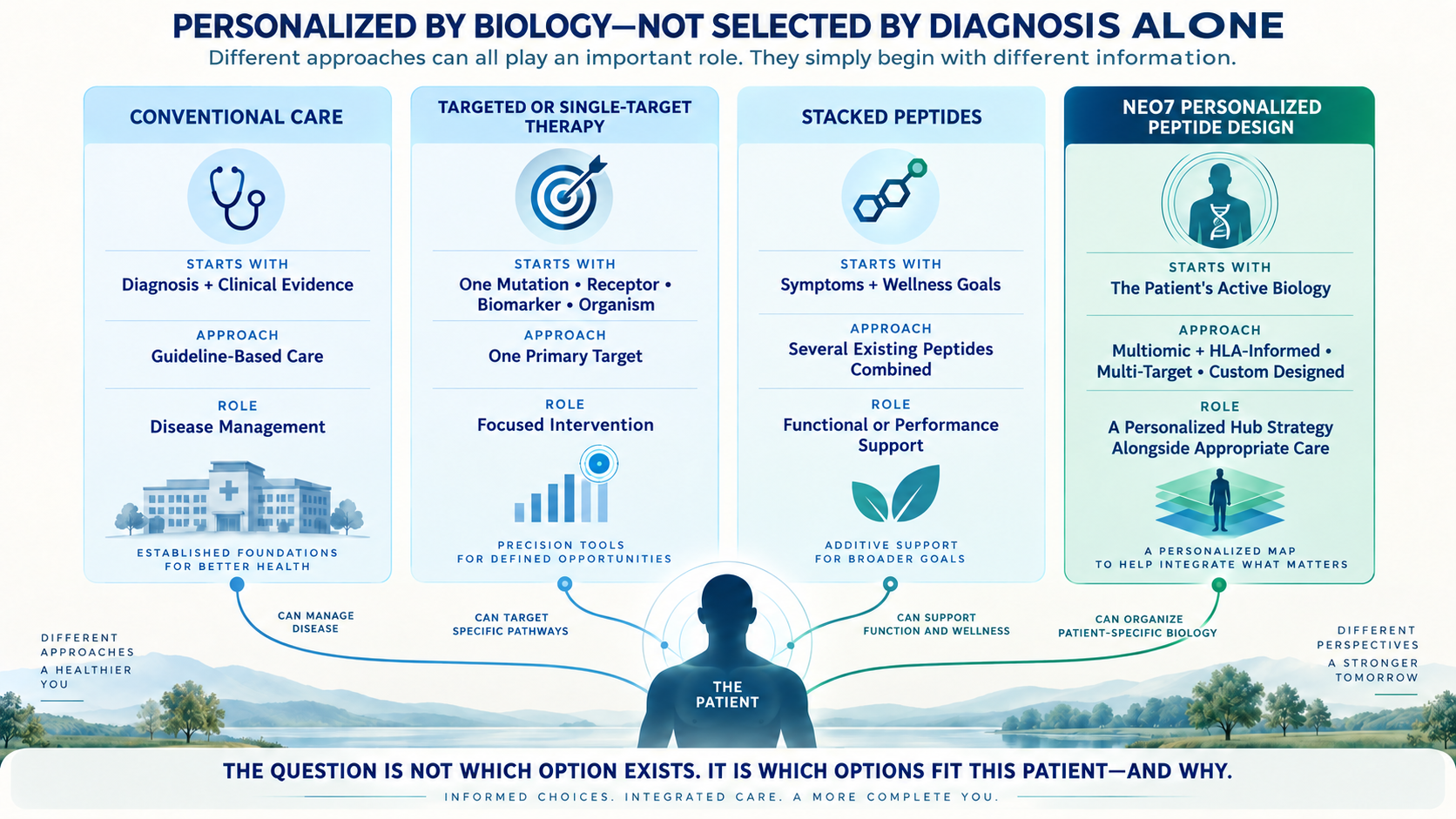
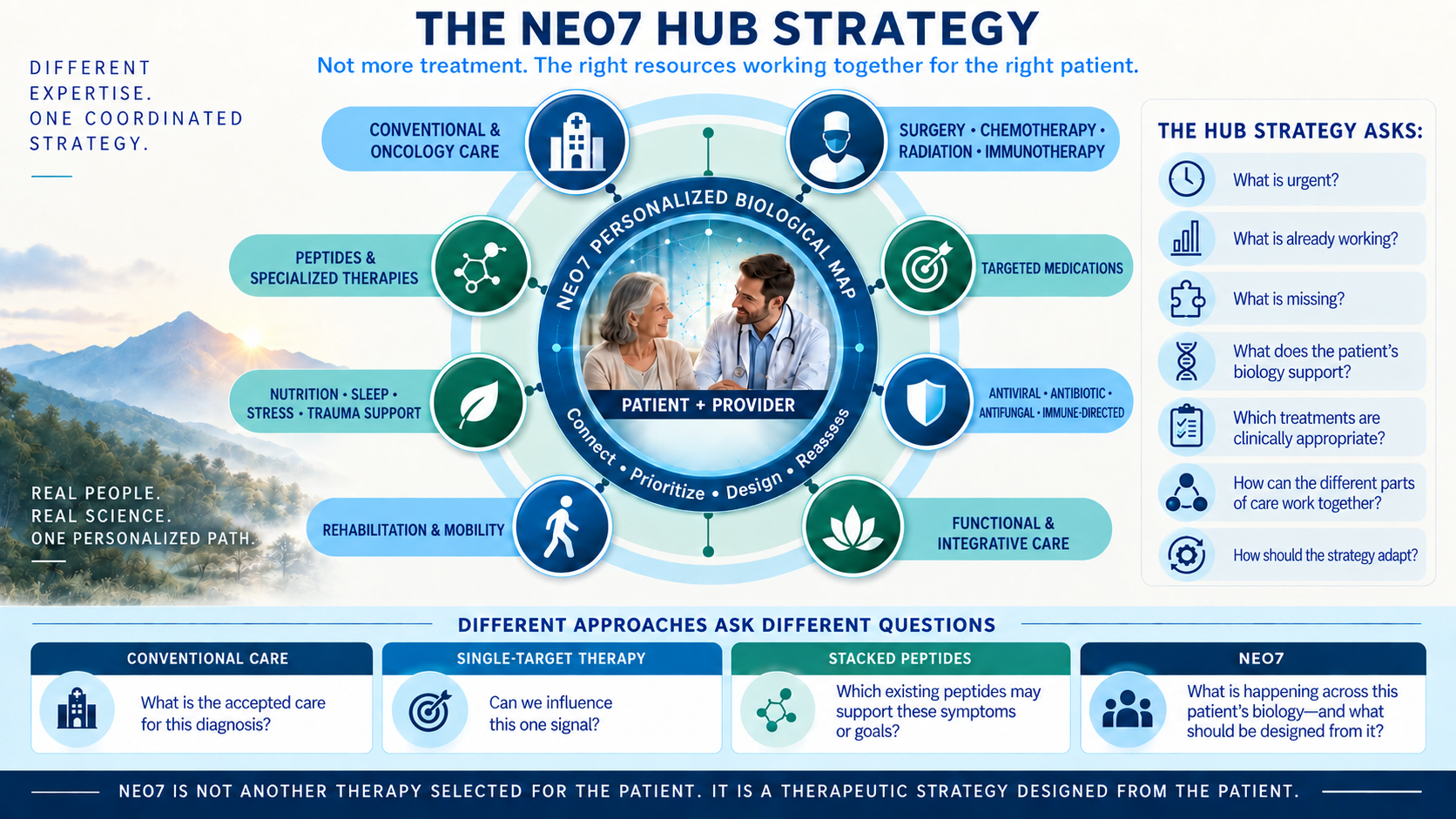
Neo7 starts by asking:
What is happening in this patient’s biology now, which signals are connected, and what should be designed specifically for them?
How the Approaches Differ
| Therapy Characteristic | Neo7 Personalized Therapy | Standard or Conventional Therapy | Single-Target Therapy | Stacked Peptide Therapy |
|---|---|---|---|---|
| Starting Point | The patient’s molecular findings, HLA profile, symptoms, history, diagnosis, known mutations, and current treatments | The diagnosis, disease stage, clinical guidelines, symptoms, and established evidence | One mutation, receptor, protein, organism, symptom, or pathway | A diagnosis, symptom group, wellness goal, or desired effect |
| Patient Specificity | Designed specifically for one patient | Selected from established treatments that may be adjusted for the patient | Personalized only when the selected target is unique or confirmed in that patient | Usually selected from existing peptides rather than created from the patient’s full molecular profile |
| Biological Depth | Connects functional genomics, active RNA signaling, protein activity, HLA presentation, and disease-specific information | Varies by treatment; may include imaging, pathology, routine laboratories, biomarkers, and molecular profiling | Focuses mainly on one known biological target | Focuses on the known actions of several individual peptides |
| Target Strategy | A coordinated group of connected patient-specific targets | May address the disease broadly or use one or more established treatment targets | One primary target | Several separate peptides combined into a protocol |
| HLA-Informed Design | Uses the patient’s HLA profile to help prioritize peptide targets | Not routinely part of every therapy, although some immune treatments use antigen or HLA-related information | Depends on the treatment | Typically not designed around the patient’s complete HLA profile |
| How It Is Made | Custom designed and manufactured after the patient’s analysis | Generally manufactured in advance using standardized formulations | Manufactured in advance for a defined target | Existing peptides are selected and combined |
| Primary Question | “What is driving this patient’s biology, and which connected signals should we target?” | “What treatments are supported for this diagnosis and clinical situation?” | “Can we block or influence this one target?” | “Which available peptides may support these symptoms or goals?” |
| Use With Other Care | Built for a coordinated both-and Hub Strategy | May be used alone or combined with other established treatments | Commonly combined with other therapies | Commonly added to a broader medical or wellness plan |
| Monitoring | Clinical response plus repeat molecular analysis of the targeted biology | Symptoms, imaging, laboratories, disease markers, and established clinical measures | Response of the target and related clinical measures | Symptoms, function, routine laboratories, and patient-reported response |
| When Biology Changes | Targets can be reassessed and the personalized design may be adapted | Treatment may be continued, changed, or advanced according to response and clinical guidelines | A new target or therapy may be needed | The stack may be adjusted by adding, removing, or changing existing peptides |
Why Neo7 Does Not “Cherry-Pick” One Therapy
Complex cancer and chronic disease rarely operate through one isolated signal.
Neo7 does not assume that one drug, one supplement, one peptide, one mutation, or one therapy should carry the entire treatment plan. It also does not simply add more treatments because they are available.